Since the turn of the millennium, the awareness in liberal democratic societies has grown that religion cannot simply be regarded as a private matter, but that it has an indispensable public dimension. Unfortunately, the religious context of terrorism and of violent conflicts have more strongly reinforced this awareness than the many positive, constructive contributions by religions to the common good. There is also an increasing appreciation, however, of how much liberal democratic societies gain from the political and social engagement of NGOs, institutions, groups and individuals – among which religious groups and religiously inspired people play an important role.
Thus, for example, in recent decades the significance of interreligious communication and cooperation for community building and peace in the world has repeatedly been pointed out. At global, regional and local level representatives of different religions commit themselves to working for peace, justice, human rights, integrity of creation as well as for the solution of pressing problems, such as integrating migrants.
In general, the contributions by religions to the common good imply an educational aspect: They aim to stimulate processes of perception and thinking that uncover new perspectives and help to discover new opportunities for action. Thus, on the one hand, education is an integral part of the public dimension of religion, and on the other, it is the realm of public education that constitutes an important subject of social debate to which religions can make substantial contributions. From both perspectives, promoting the ability to deal with plurality and to work towards an inclusive society are major objectives of education – and interreligious education is of substantial significance in this context. The fundamental acknowledgment of the Other, precisely in his or her remaining otherness and strangeness, can be an important result of religious and interreligious education that contributes to a successful social coexistence, especially including immigrants.
In the Christian context, the calling to contribute to the common good has come to be discussed under the label of “public theology”, and has led to the establishment of a “Global Network of Public Theology” (2007). In this discussion, the educational aspect has repeatedly been mentioned, but has remained marginal up to now. Other religions have their own traditions and perspectives, from which responsibility for society is motivated and reflected. Judaism, for instance, has significantly influenced public culture, especially in Europe, and it keeps sensitizing the public to problematic developments in society. For representatives of Islam in liberal democratic societies it becomes more and more important not just to show that Islam is compatible with democratic values, but to show that Islamic perspectives can contribute to the common good. In Buddhism, since the middle of the 20th century, the movement of “engaged Buddhism” has developed, in which meditative spirituality is combined with active social and ecological commitment. And in the Bahá’ís community social and non-partisan political commitment has always been fundamental. It is obvious that all these religions, and others, have an important public and educational function in society that provides resources for the realisation of liberal, democratic values.
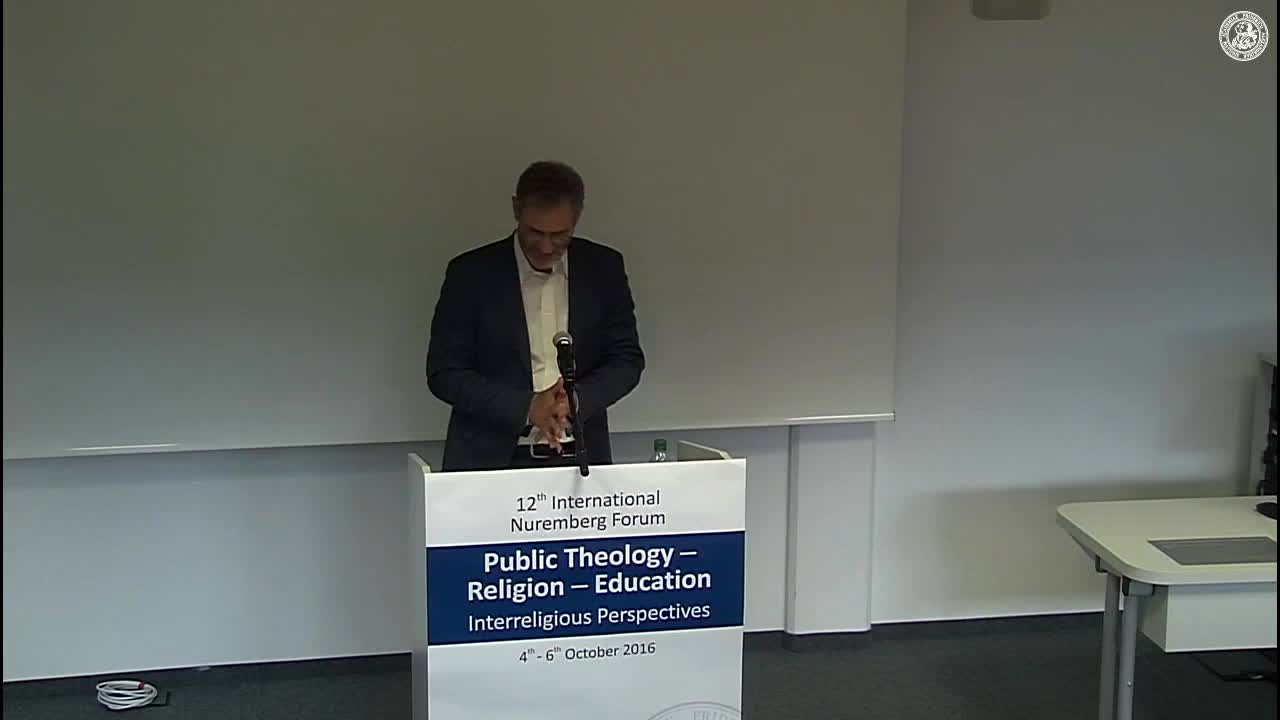
Thus, the Nuremberg Forum 2016 intends to draw attention to the contribution of religions to the common good, with a focus on educational aspects and stimulated by the Christian concept of 'public theology'. By promoting interdisciplinary and interreligious academic and social discourse it aims to strengthen the religions’ public responsibility, especially with respect to public education, and their public visibility as resources for the humanization of societies.
Semester
Wintersemester 2016/2017
Lehrenden
Zugang via
Offener Zugang
aktualisiert
2016-10-13 15:02:25
Abonnements
0
-
# 1Offener ZugangIntroductionProf. Dr. Manfred Pirner2016-10-04 Wintersemester 2016/2017
-
# 2Offener ZugangPublic Theology and Interreligious Dialogue. Fundamental PerspectivesProf. Dr. Heinrich Bedford-Strohm2016-10-04 Wintersemester 2016/20172Public Theology and Interreligious Dialogue. Fundamental PerspectivesProf. Dr. Heinrich Bedford-Strohm2016-10-04 Wintersemester 2016/2017Offener Zugang
-
# 3Offener ZugangThe Contribution of Religions to the Common Good in a Pluralistic Society - From a Christian perspectiveProf. Dr. Dirk J. Smit2016-10-04 Wintersemester 2016/20173The Contribution of Religions to the Common Good in a Pluralistic Society - From a Christian perspectiveProf. Dr. Dirk J. Smit2016-10-04 Wintersemester 2016/2017Offener Zugang
-
# 4Offener ZugangThe Contribution of Religions to the Common Good in a Pluralistic Society - From a Islamic perspectiveDr. Abdullah Sahin2016-10-04 Wintersemester 2016/20174The Contribution of Religions to the Common Good in a Pluralistic Society - From a Islamic perspectiveDr. Abdullah Sahin2016-10-04 Wintersemester 2016/2017Offener Zugang
-
# 5Offener ZugangThe Contribution of Religions to the Common Good in a Pluralistic Society - From a Jewish perspectiveEine jüdische Expertin2016-10-04 Wintersemester 2016/20175The Contribution of Religions to the Common Good in a Pluralistic Society - From a Jewish perspectiveEine jüdische Expertin2016-10-04 Wintersemester 2016/2017Offener Zugang
-
# 6Offener ZugangThe Contribution of Religions to the Common Good in a Pluralistic Society - From a Buddhist perspectiveProf. Dr. Heesoon Bai2016-10-04 Wintersemester 2016/20176The Contribution of Religions to the Common Good in a Pluralistic Society - From a Buddhist perspectiveProf. Dr. Heesoon Bai2016-10-04 Wintersemester 2016/2017Offener Zugang
-
# 7Offener ZugangThe Contribution of Religions to the Common Good in a Pluralistic Society - From an empirical sociological perspectiveProf. Dr. Annette Schnabel2016-10-04 Wintersemester 2016/20177The Contribution of Religions to the Common Good in a Pluralistic Society - From an empirical sociological perspectiveProf. Dr. Annette Schnabel2016-10-04 Wintersemester 2016/2017Offener Zugang
-
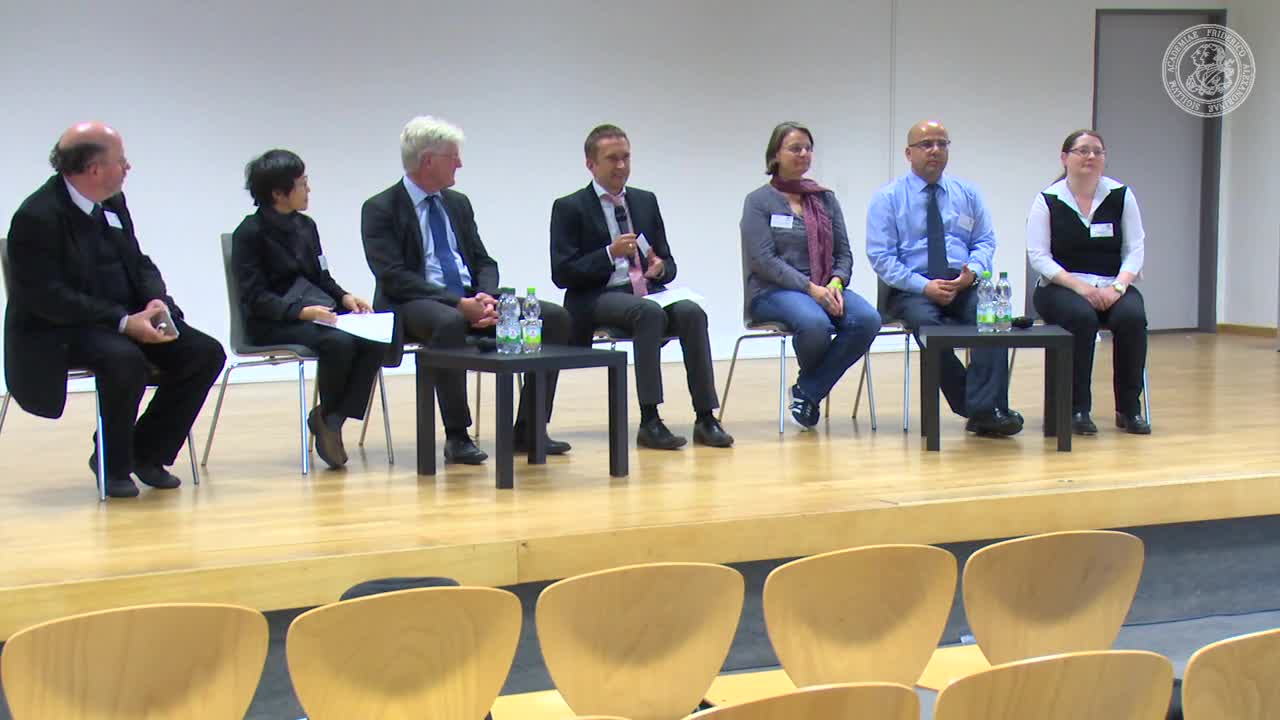
# 8Offener ZugangPanel discussionProf. Dr. Henrik Simojoki2016-10-04 Wintersemester 2016/20178Panel discussionProf. Dr. Henrik Simojoki2016-10-04 Wintersemester 2016/2017Offener Zugang
-
# 9Offener ZugangMonotheistic Religions as Curse or Blessing - A Matter of Critical Education?Prof. Dr. Jan Assmann2016-10-06 Wintersemester 2016/20179Monotheistic Religions as Curse or Blessing - A Matter of Critical Education?Prof. Dr. Jan Assmann2016-10-06 Wintersemester 2016/2017Offener Zugang
-
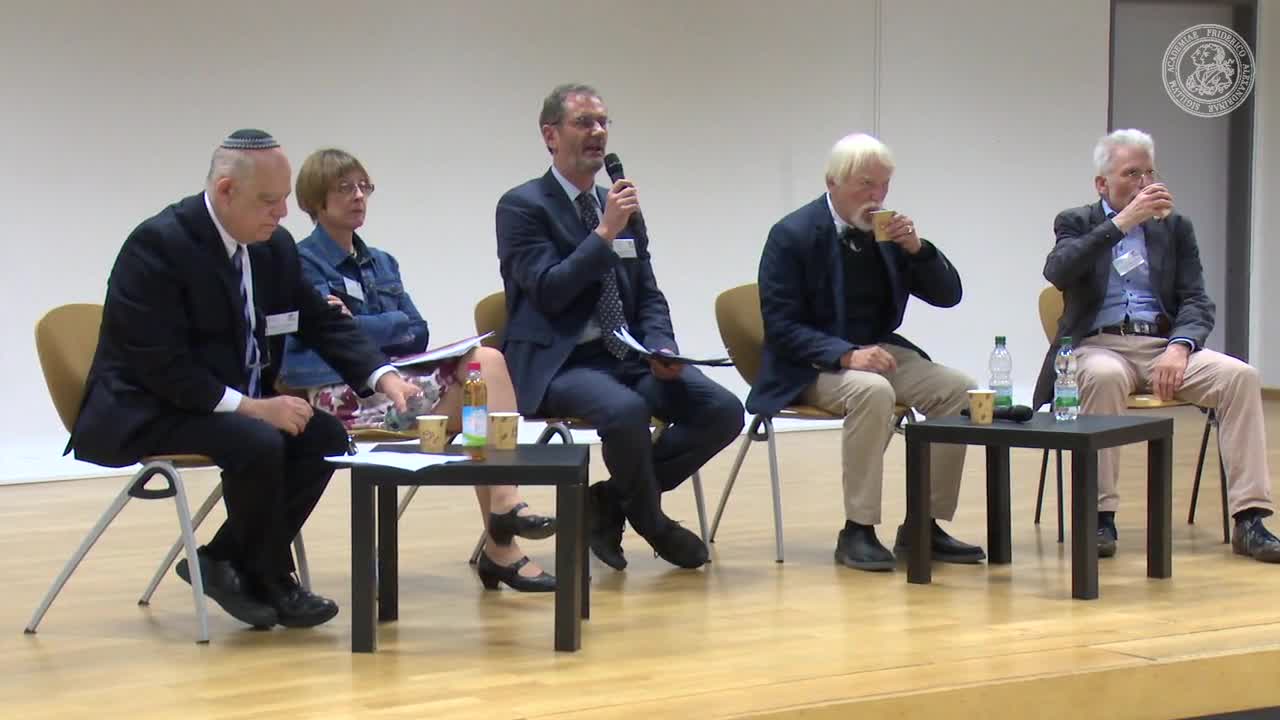
# 10Offener ZugangPanel discussionProf. Dr. Manfred Pirner2016-10-06 Wintersemester 2016/201710Panel discussionProf. Dr. Manfred Pirner2016-10-06 Wintersemester 2016/2017Offener Zugang
-
# 11Offener ZugangIslamic Contributions to the Common Good of Public EducationProf. Dr. Mouhanad Khorchide2016-10-05 Wintersemester 2016/201711Islamic Contributions to the Common Good of Public EducationProf. Dr. Mouhanad Khorchide2016-10-05 Wintersemester 2016/2017Offener Zugang
-
# 12Offener ZugangReligious Studies in Public Education: Promoting Appreciative and Critical Perspectives on Self, Society and NatureProf. Dr. Bruce Grelle2016-10-05 Wintersemester 2016/201712Religious Studies in Public Education: Promoting Appreciative and Critical Perspectives on Self, Society and NatureProf. Dr. Bruce Grelle2016-10-05 Wintersemester 2016/2017Offener Zugang
-
# 13Offener ZugangPublic Theologies or Religious Studies? Deliberations on the Basis of Multifaith Religious EducationDr. Philip Barnes2016-10-06 Wintersemester 2016/201713Public Theologies or Religious Studies? Deliberations on the Basis of Multifaith Religious EducationDr. Philip Barnes2016-10-06 Wintersemester 2016/2017Offener Zugang
-
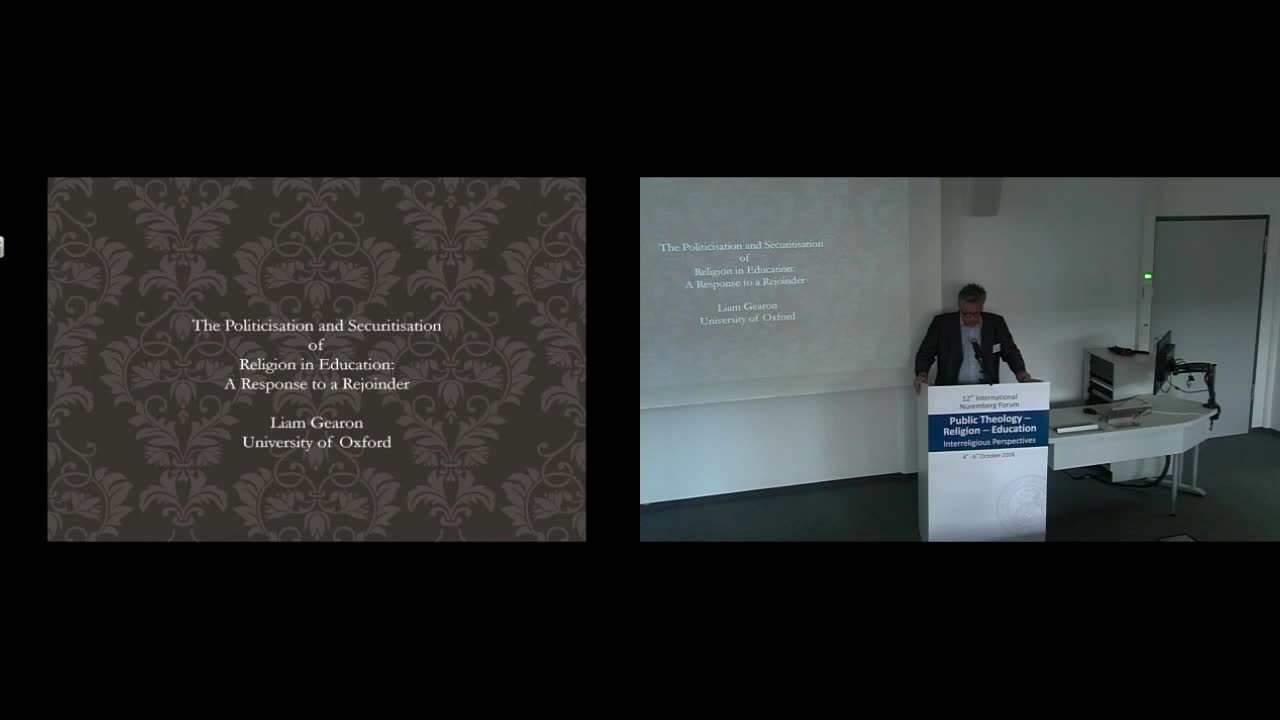
# 14Offener ZugangThe Politicization and Securitization of Religion in Education. A Response to a RejoinderProf. Dr. Liam Gearon2016-10-05 Wintersemester 2016/201714The Politicization and Securitization of Religion in Education. A Response to a RejoinderProf. Dr. Liam Gearon2016-10-05 Wintersemester 2016/2017Offener Zugang
-
# 15Offener ZugangPublic Theology and Public Education in the CityProf. Dr. Katie Day2016-10-05 Wintersemester 2016/201715Public Theology and Public Education in the CityProf. Dr. Katie Day2016-10-05 Wintersemester 2016/2017Offener Zugang